
How Much Does It Cost to Drill a Well in South Carolina?
Across two national cost guides, a complete home water well runs about $3,000 to $15,000. The drilling alone is published at $25 to $65 per foot. Those are market numbers, published for a national audience.
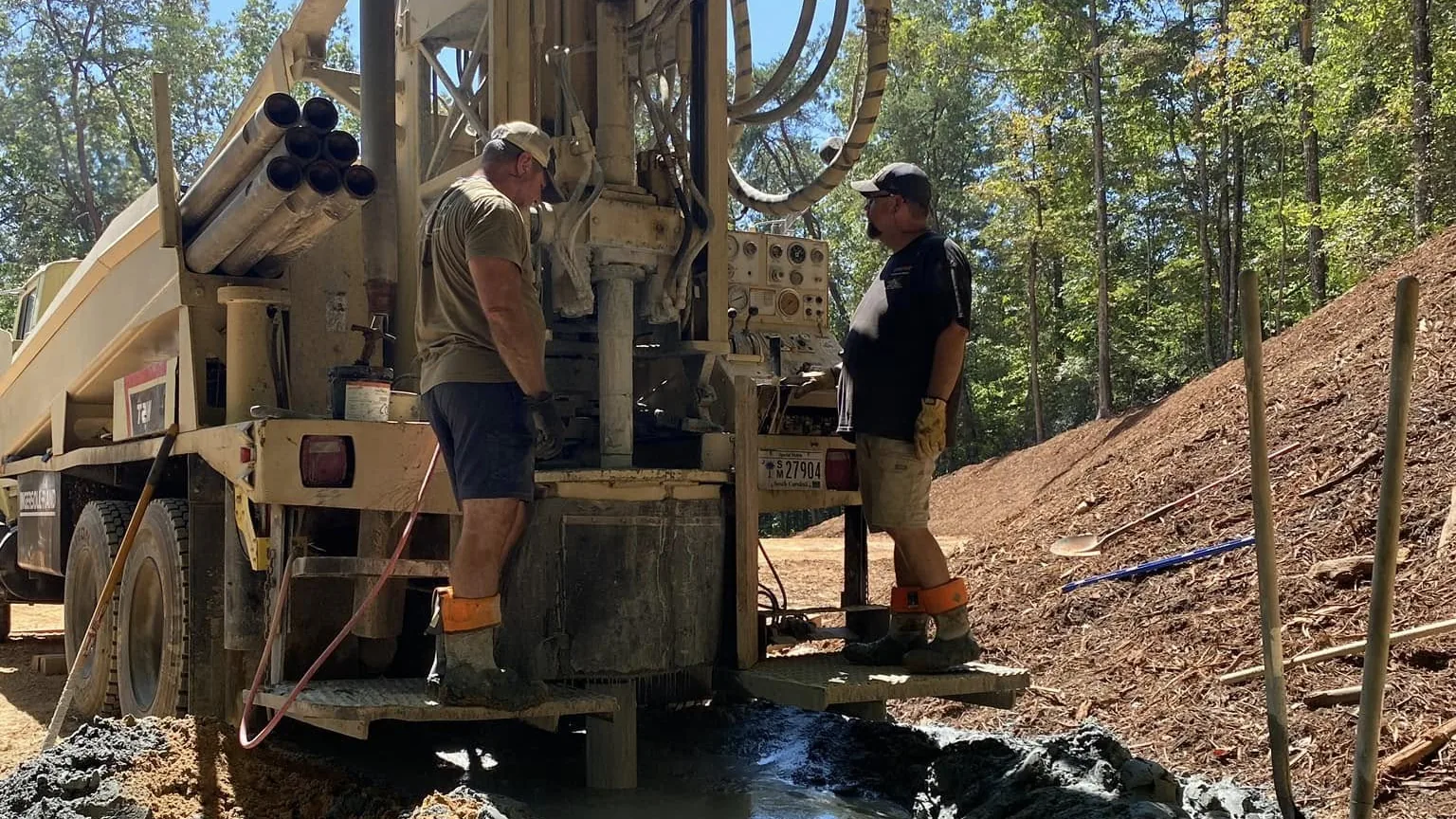
Depth is what moves the number, and depth is set by the ground under your lot. In the Upstate, drilling a new well means going through red clay and weathered rock into hard bedrock. The state well standards require casing set into that bedrock. Bedrock depth shows up when the rig reaches it. So the written estimate quotes a minimum depth. It also explains how the casing cost can change.
What do the national cost guides publish?
Two national cost guides updated in 2026 publish the ranges below. Read them as a picture of the national market.
| What the guides price | Published range |
|---|---|
| Drilling a residential well | $25 to $65 per foot. |
| A complete well, first guide | $5,500 average, most jobs $3,000 to $9,000. |
| A complete well, second guide | $3,500 to $15,000 on average. |
| A 200 foot well, 4 inch PVC casing | $7,100. |
| A 300 foot well, 6 inch steel casing | $18,360. |
Both guides also price the work by depth, casing included. Wells around here often go deeper than the shallow rows on those tables. The numbers climb with every hundred feet, which is why depth is the first question on any well estimate.
Why does depth drive the price here?
The Upstate sits on the Piedmont. USGS describes this ground as bedrock under a blanket of soil and decomposed rock called saprolite. Water moves through fractures in that bedrock.
That is the whole story of a Piedmont well. The rig is hunting fractures in the rock. Two lots on the same road can need very different depths.
State groundwater records show the spread. Monitoring wells logged in Spartanburg, Cherokee, York, Chester, Laurens and Greenville counties run from 80 feet to 700 feet deep. Two Spartanburg County records sit at 225 feet and 442 feet. Casing on those same wells ran from 6 feet to 72 feet.
USGS research on Piedmont bedrock found most open fractures between 50 and 180 feet down. Yield in that work rose with depth up to about 200 feet, then fell off past it. A hole can still need to go much deeper before it crosses enough water-bearing fractures.
Our own work follows the same pattern. Sometimes we hit good water near 200 feet. A job in Inman ran through hard rock, and we hit good water at a little over 520 feet.
What else is on a well estimate?
The hole is one line on the estimate. A working well also needs casing, a pump system, a pressure tank and a line to the house. Here is what the national guides publish for those parts.
| Line item | Published range |
|---|---|
| Casing pipe, PVC | $6 to $10 per foot. |
| Casing pipe, steel | $30 to $130 per foot. |
| Well pump | $900 to $2,500. |
| Pressure tank and switch | $300 to $500 in one guide. |
| Pressure tank | $1,400 to $2,400 in the other guide. |
| Water line and wiring | $50 to $150 per foot. |
| South Carolina well permit | $70 for a home well. |
The two guides land far apart on tanks, so the table carries both numbers. Casing length moves with the hole, because casing is set into bedrock. Well pump installation is sized to the depth of the well and the water a household uses. Well pressure tanks and the pressure switch go in with the pump work. If you are pricing a pump for a well you already have, read what a replacement pump costs.
What does the South Carolina permit cost?
The state fee regulation sets $70 for an individual residential well and $50 for an irrigation well. The state has 48 hours to review the notice of intent. Weekends and state holidays do not count.
In South Carolina the driller carries that paperwork. State rules make the well driller responsible for permit coverage before construction starts. The driller also files the water well record with the state within thirty days of finishing. That record puts your well depth and casing depth on file. The permit steps, the setbacks and who files what are covered in our guide to well permits in South Carolina.
How long does the drilling take?
National guides put the drilling itself at one to three days. One of them adds about another day for the pump system. With piping and wiring, that guide puts the whole job near a week.
The site survey sets your schedule. Hard rock, a long water line or a wet week can stretch it.
What makes one well cost more than the next?
Five things move the price on a Piedmont lot:
- How deep the rig has to go to find usable water.
- How far down bedrock sits, because casing is set into it.
- How much water the house or the farm needs each day.
- How far the wellhead sits from the house, which sets the water line length.
- Room for the drill rig and the water truck to get in and work.
Yield matters as much as depth. A published study looked at 1,069 wells in Spartanburg, Greenville and northern Pickens counties. The median yield was 8 gallons per minute. Half of those wells came in under that figure and half above it. A household of seven needs more gallons per minute than a household of two. Target yield shapes the job.
How do you get a real number for your lot?
Published ranges describe a market. Your lot gets priced once we have seen it. We do a site survey before we schedule. We help you pick a good location and put a free estimate in writing.
Call (864) 768-5688 and we will get back to you about well drilling in the Upstate. We work about 60 miles around Spartanburg from our shop in Pacolet.