
How Much Does It Cost to Run a Water Line From a Well to a House?
A national cost guide puts the run from a well to a house at $50 to $150 per foot. That figure covers the piping and the electrical lines together. It is a market number for the whole country, not our price list.
Other cost guides price a different job: a city water line from the street to the house. One of them prices a trenched replacement of that line at $50 to $200 per linear foot, installed. In the same guide’s trenching table, machine trenching alone runs $5 to $12 per foot. PVC or polyethylene pipe runs $0.50 to $5 per foot for the material.
What do cost guides charge to run a water line?
Here is what three national cost guides publish. Each row says what the figure covers. Only the first row prices a line from a well.
| What the figure covers | Published range | Kind of source |
|---|---|---|
| Piping and electrical run from a well to a house | $50 to $150 per foot | a national cost guide |
| Trenched water line replacement, city line from the street | $50 to $200 per linear foot, installed | a second national cost guide |
| Main water line replacement, city line, average job | $2,000 to $5,000 | the second guide |
| Trenching a new city water line, meter hookup included | $1,700 to $3,000 | the second guide |
| Machine trenching only, equipment and labor | $5 to $12 per linear foot | the second guide |
| PVC or polyethylene pipe, material only | $0.50 to $5 per linear foot | the second guide |
| Main water line installation, city line | $1,500 to $12,000, average $3,750 | a third national cost guide |
| Main water line per foot, city line | $75 to $225, most paying $100 to $200 | the third guide |
| Dug trench and backfill, city line | $175 to $225 per linear foot | the third guide |
The trenching and pipe rows sit far below the installed rows. Labor makes up most of the cost of a main line job, one guide says.
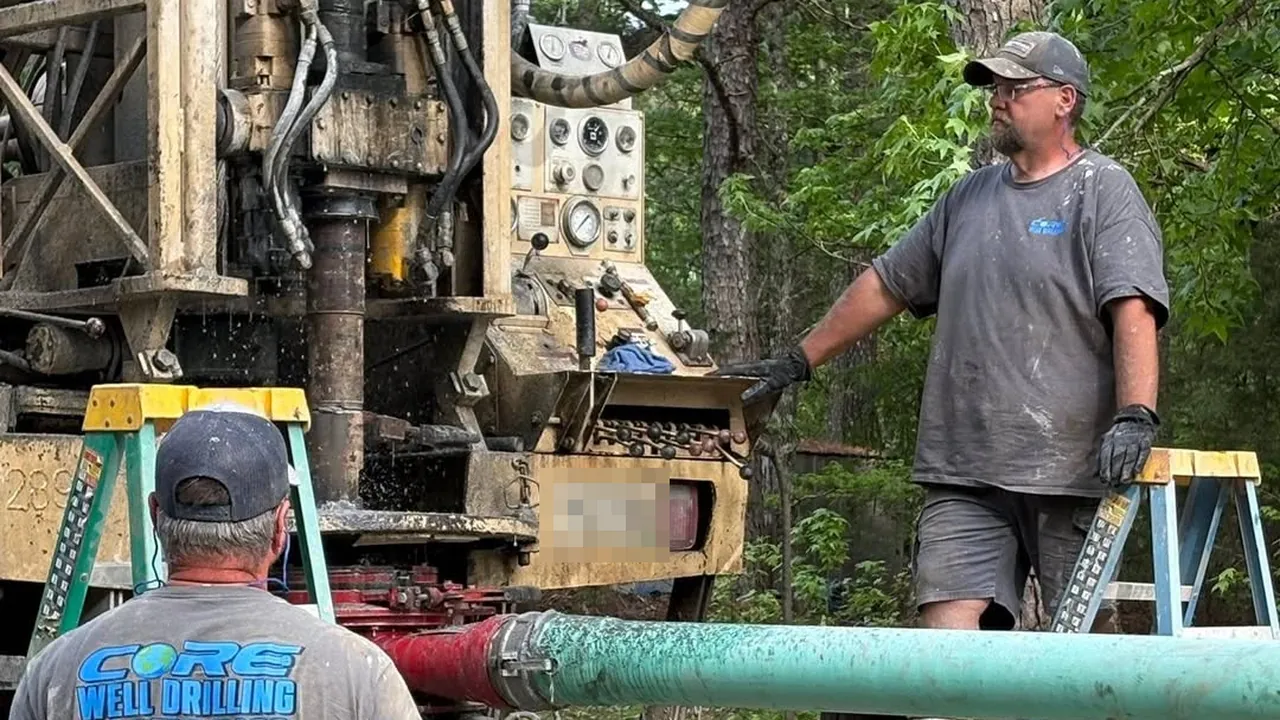
Our water line installation work starts at the wellhead and ends at the house. We cut the trench, lay the pipe below the frost line and make the hookup. The first row is the closest match to that job.
Which cost guide figure fits a line from a well?
Two of the three guides define the main line as the pipe from the city’s supply to the house. Their numbers include work a well line never has. One guide’s $1,700 to $3,000 for a new water line trench includes connecting the system to the meter.
A line from a well starts underground at the casing. EPA describes the pitless adapter as a connector that keeps the pipe carrying water below the frost line. From there the line runs to the pressure tank and the pressure switch.
The well needs power, too, and the first guide prices the piping and the electrical lines together. Read the city rows as a rough check on trenching and pipe for a city job.
What moves the price on an Upstate lot?
Trench length and rock move the price the most. One guide says the farther the well is from the home, the higher the cost. It prices that extra run at $50 to $150 per linear foot for piping and wiring.
Then there is the ground itself. USGS says the material over Piedmont bedrock ranges from clay and rock fragments to sand and boulders along streams. The Cecil soil series is mapped across the Piedmont, South Carolina included. Its subsoil is red clay.
One trenching guide says digging costs more in hard clay or rocky soil. Rock also changes how the pipe goes in. The residential code says piping may not rest on rocks at any point. In rocky soil, the code calls for digging two or more pipe diameters deeper, then bringing the trench back up with compacted granular fill.
A driveway or a walk in the path adds labor. One guide says a line under a driveway, a sidewalk or rocky soil takes longer to replace.
A long run needs bigger pipe so pressure still holds at the far end. Larger pipe means more material and more cost, one guide notes.
The line connects at the pitless adapter on the casing and at the pressure tank. Those fittings are part of every hookup, short or long.
The pump needs a power run from the house panel out to the well. Well pump installation covers the pump, the pressure tank and switch, and the wiring.
A barn or a shop can run off the same well. The line comes off the wellhead or off a tee in the run to the house. Each extra foot of trench adds to the total.
The usual sign of a leak is a wet patch in the yard that stays wet. Pressure sags, and the pump starts up with every tap closed. Replacing an old line usually means a new trench beside the old one.
How deep does a well water line have to be buried?
The residential code adopted in South Carolina sets a floor for water service pipe. The pipe goes at least 12 inches deep and at least 6 inches below the frost line. Backfill has to be free of rocks until the pipe sits under 12 inches of tamped earth.
We set the line deeper than the minimum so yard work and equipment stay clear of it. The depth on your lot gets settled at the site survey.
Buried utilities get marked before the trench is cut. South Carolina law has excavators notify SC811, the state notification center, before they dig. The notice goes in three to twelve full working days before the work starts. The day it is given does not count.
These are general lines from the code and the statute, not legal advice for your lot.
What will a water line from your well cost?
A national range is a starting point. Your line gets priced once we have seen the run and the ground. We do a site survey before we schedule, then give you a free estimate in writing.
The well, the pump and the line to the house are one job for us. For the well itself, see what a new well costs in South Carolina. We are South Carolina certified well drillers, based in Pacolet, just outside Spartanburg. We work the Upstate about 60 miles around Spartanburg.
See how water line installation works from the wellhead to the house. Call (864) 768-5688 and we will get back to you.