
How Much Does It Cost to Replace a Well Pump in South Carolina?
Most homeowners pay between $975 and $2,821 to replace a well pump. The national average sits near $1,898. Those figures come from a national cost guide updated in June 2026. A second national guide puts a full replacement at $900 to $2,500.
The pump is only part of the bill. The same guide puts labor to pull the old pump and set the new one at $250 to $1,000. Around Spartanburg most house wells are deep rock wells, so the pump hangs hundreds of feet down the casing. That pushes a lot of Upstate jobs toward the middle or upper end of those ranges. Setting a pump that deep takes more drop pipe and more wire. That is part of why well pump installation costs more here than on a shallow well. Read every number on this page as a market number, not our price list.
What does a well pump replacement cost in 2026?
Below are the published ranges, all from national cost guides updated in 2026. None of these are our prices.
| Job | Published range |
|---|---|
| Well pump replacement, all in | $975 to $2,821. |
| National average replacement | $1,898. |
| Full low to high range | $200 to $5,800. |
| Submersible pump, equipment only | $275 to $1,550. |
| Shallow well jet pump, equipment only | $230 to $1,000. |
| Deep well jet pump, equipment only | $440 to $1,200. |
| Labor to pull and set a pump | $250 to $1,000. |
| Labor by the hour | $45 to $150. |
| Pressure switch, installed | $120 to $175. |
| Pressure tank replacement | $800 to $3,800. |
The low end of that range covers shallow wells and small jet pumps. That is not what sits under most houses in Spartanburg County. Look at the last row too. When the tank has failed along with the pump, well pressure tanks get replaced on the same visit. The published tank range runs $800 to $3,800, so it moves the total a long way.
Does a submersible pump cost more than a jet pump?
Usually yes, and the reason is the well rather than the pump. A national cost guide prices the submersible pump itself at $275 to $1,550. Shallow well jet pumps run $230 to $1,000 in the same guide. Deep well jet pumps run $440 to $1,200.
The two kinds work in opposite directions. The National Ground Water Association says jet pumps sit above ground and use suction to lift water, so they have to be primed first. Submersible pumps sit down in the water and push it up the pipe. NGWA also notes a submersible moves more water on the same size motor, so it runs more efficiently.
Suction has a hard limit. NGWA puts shallow well jet pumps at water no more than about 25 feet down. A state well owner handbook adds that most submersibles go in wells 4 inches across or larger, while jet pumps suit wells 3 inches or smaller. Upstate rock wells are usually 6 inch casing with water well past 25 feet. That makes a submersible the normal answer around here.
Why does well depth change the price in the Upstate?
Depth is the biggest swing factor on a South Carolina pump job. The Upstate sits on the Piedmont, which is red clay and weathered rock over fractured bedrock. USGS describes water movement in that bedrock as flow through fractures. The well has to reach deep enough to meet them.
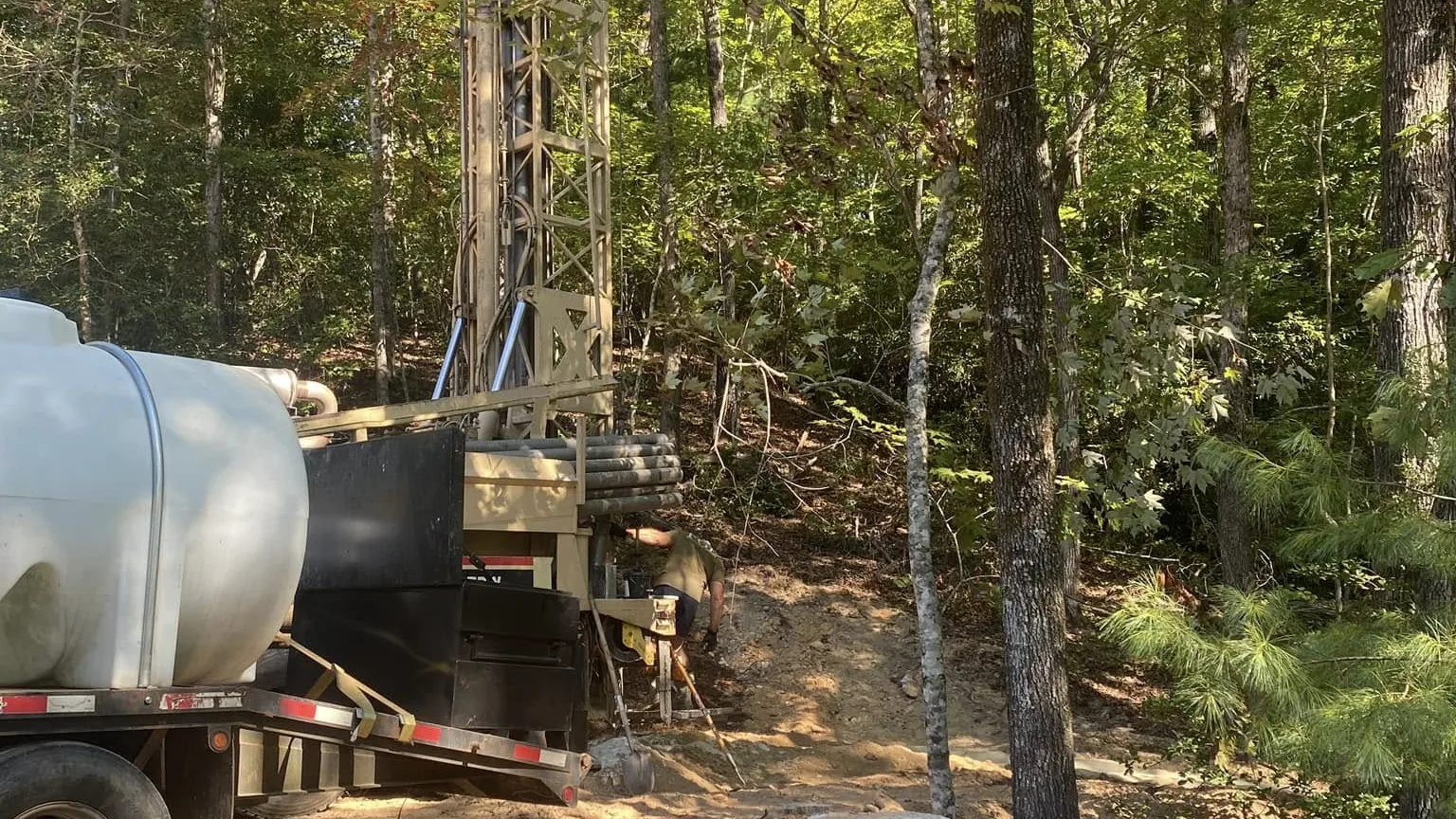
Two state monitoring wells in Spartanburg County show the spread. SCDNR records well SP-1581 at Croft State Park at 225 feet deep. Well SP-297 off Geddes Street in Spartanburg is 442 feet deep. Both are 6 inch wells cased about 50 feet into rock.
A pump hanging at 400 feet needs 400 feet of drop pipe and wire to match. It needs more power to lift water that far. Pulling it takes a hoist and time. All of that lands in the labor line, which the cost guides put at $45 to $150 per hour.
Should you repair the well pump or replace it?
Sometimes the pump is fine and something cheaper in front of it has quit. A national cost guide puts well pump repair at $373 to $1,624, with an average near $974. The same guide prices a pressure switch at $120 to $175 installed and a control box at $200 to $500.
That is why the order of checks matters. Power and the breaker come first, then the pressure switch, then the tank, then the pump. Plenty of no water calls end at the switch. If you are working through symptoms right now, start with well pump repair.
Replacement usually wins when the pump is already old. It also wins when the same well has been pulled more than once. Once a rig is set up over the well, most of the labor to swap a pump is already spent. A new pump on the end of that trip often costs less over the years than pulling a tired one again.
How long should a well pump last?
There is no single number, and the sources split on it. The National Ground Water Association says most residential wells are built to last 20 or more years. It adds that the pump system wears out before the well does. NGWA also says a submersible can be very reliable and go years or even decades without service.
National cost guides are more specific and less careful. One puts a well pump at 8 to 15 years with regular maintenance. Another page on the same site says 15 years.
What actually wears a pump out is cycling. The Water Systems Council says most wear and tear on a well pump happens when it stops and starts. A waterlogged or undersized tank makes the pump start far more often than it should.
Will homeowners insurance pay for a new well pump?
Usually not, if the pump simply wore out. A standard homeowners policy pays for sudden damage from a listed event. The Insurance Information Institute states that a standard policy will not pay for damage caused by a flood, earthquake or routine wear and tear.
A pump killed by lightning is a different case. Consumer insurance guides list fire, lightning, wind, hail and falling objects as the kind of events a standard policy answers. A pump that quit after twelve years of service is wear and tear, and that falls on the homeowner.
Where the pump sits can matter too. If it is attached to the house it falls under dwelling coverage. If it sits in a well house away from the home, it may fall under other structures coverage. The Insurance Information Institute puts that limit at about 10 percent of the amount on the house. Some insurers sell an equipment breakdown endorsement that does cover mechanical failure, so call your agent and read your own policy.
What should you do next?
Get the well looked at before you buy a pump. The pump has to match the depth of the well and how much water the household uses. A pump that is too small runs constantly, and one that is too big cycles hard on the tank.
Core Well Drilling works out of Pacolet and covers the Upstate about 60 miles around Spartanburg. We give a free estimate on a new pump set in your well. Call (864) 768-5688 and we will get back to you.